Years of multidisciplinary practice across complex development environments.
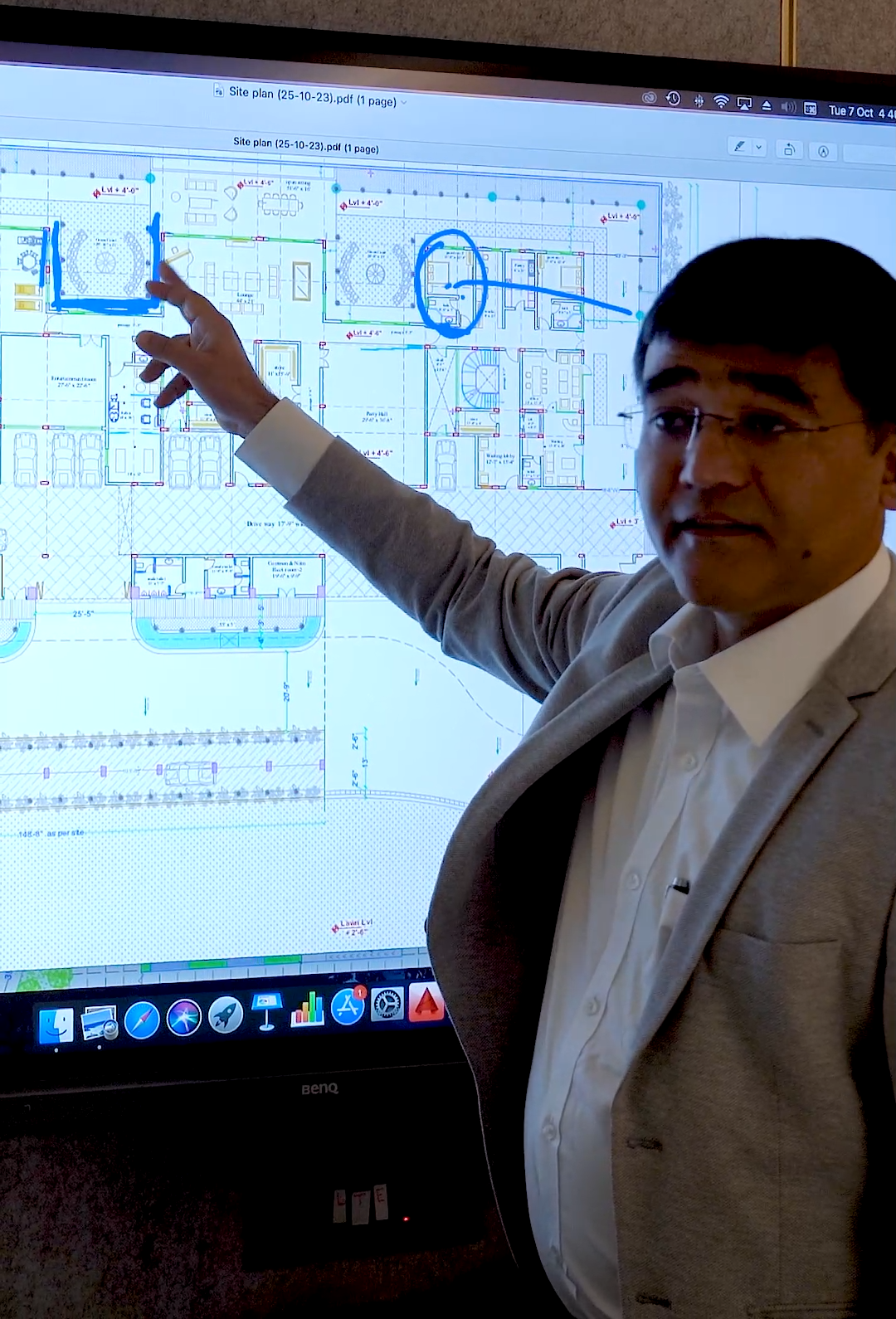
An organic transition rooted in decades of practical exposure.
Fd Design's engagement with strategic development has not emerged from a deliberate pivot, but through the natural accumulation of proximity — to landowners navigating generational decisions, to developers structuring phased opportunities, to industrial families evaluating long-dormant assets, and to institutional stakeholders aligning complex project ecologies.
Over two and a half decades of architectural practice, Raghu Sharma has inhabited the intersection where design intent meets execution reality. That position — situated between creative vision and practical constraints — is precisely where strategic development thinking becomes most valuable.
The understanding of land, of hospitality environments, of redevelopment potential, and of stakeholder alignment has been earned through years of sitting at tables where decisions of consequence were being made, and contributing meaningfully to those conversations.
Relationships
Engagement
Intelligence
Dialogue
Exposure
Alignment
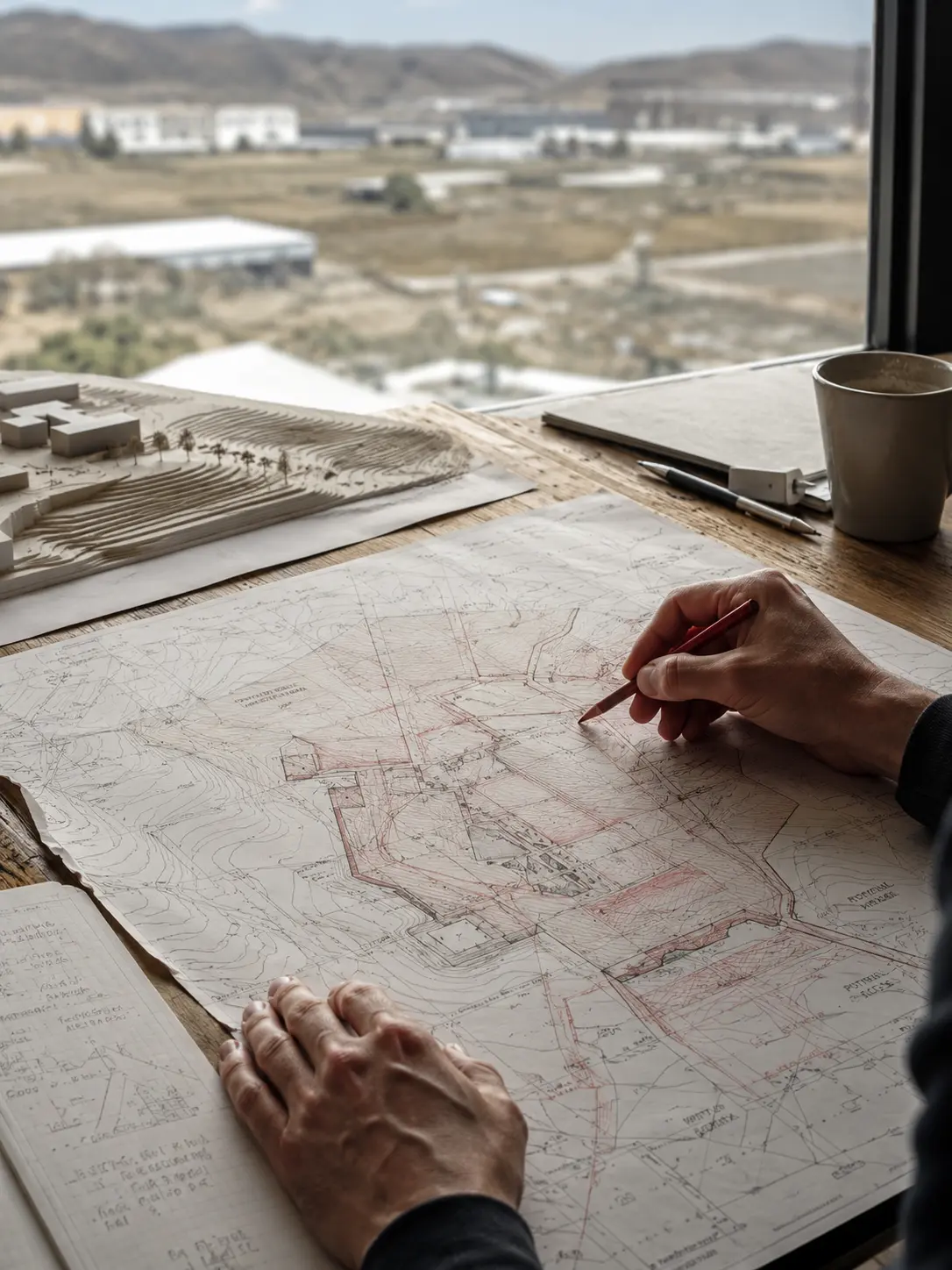
"Land must be understood contextually, not merely commercially."
The convictions that shape engagement.
Meaningful development environments do not emerge from isolated design decisions or transactional land deals. They emerge from the patient alignment of vision with execution realities, of investor logic with contextual understanding, of commercial ambition with social and stakeholder sensitivity.
Hospitality projects fail when they are conceived without understanding how guests inhabit space, how operators manage complexity, and how locations evolve over time. Redevelopment efforts falter when the existing ecosystem is treated as an obstacle rather than a starting condition.
Long-term value in development environments emerges from strategic coherence — from decisions made across a consistent intellectual framework rather than in response to individual pressures. This coherence is what distinguishes enduring development from construction.
"Structure before speed. Context before construction. Alignment before ambition."
Areas of active intellectual engagement and strategic interest.
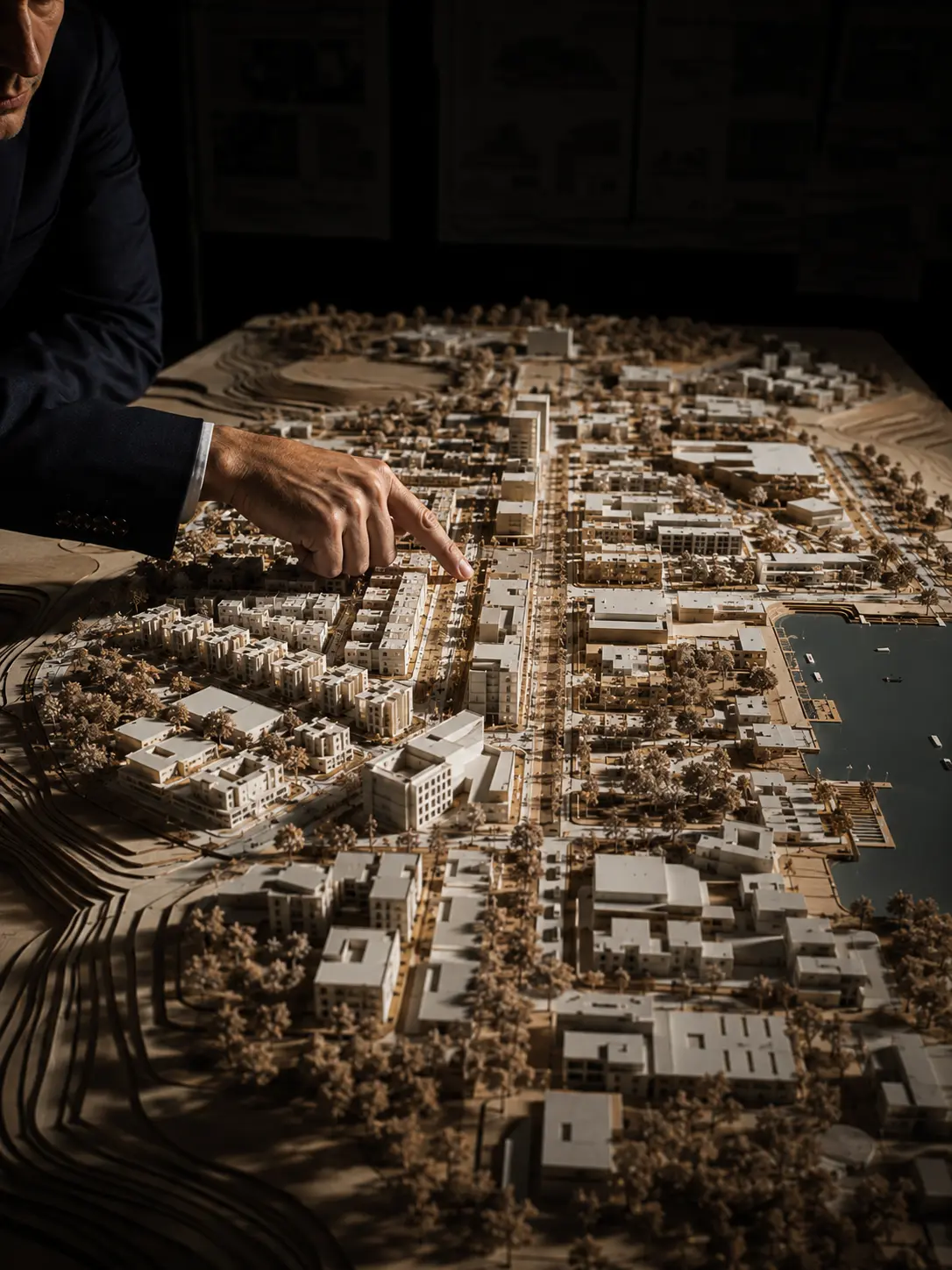
Hospitality & Tourism Corridors
The development of hospitality assets within evolving tourism corridors presents layered opportunities that reward contextual understanding over formulaic approaches.
Township Revival Possibilities
Established townships with underperforming land use often contain significant latent potential, particularly when evaluated through integrated development frameworks.
Redevelopment & Adaptive Reuse
Existing built environments, when repositioned with sensitivity and strategic intelligence, frequently outperform greenfield development in both financial and social value generation.
Mixed-Use Environments
The design of genuine mixed-use environments — where residential, commercial, hospitality, and civic uses reinforce rather than compete — demands integrated development thinking.
Integrated Land Development
Large-scale land development opportunities require frameworks that balance immediate commercial logic with long-term spatial quality and stakeholder alignment.
Asset Repositioning
Established assets with diminishing returns often carry the foundations for meaningful repositioning — provided the evaluation framework is appropriately patient and contextual.
Phased Urban Expansion
Urban expansion that proceeds through intelligently phased development creates more coherent, more valuable, and more sustainable built environments than speculative land release.
Long-Term Development Ecosystems
The most enduring development outcomes emerge from ecosystems — of stakeholders, of capital, of design intent, and of execution capability — that are carefully assembled and patiently maintained.