
What Could
Your Hotel
Become?
30 Questions to Ask Before Your Next Hotel Investment
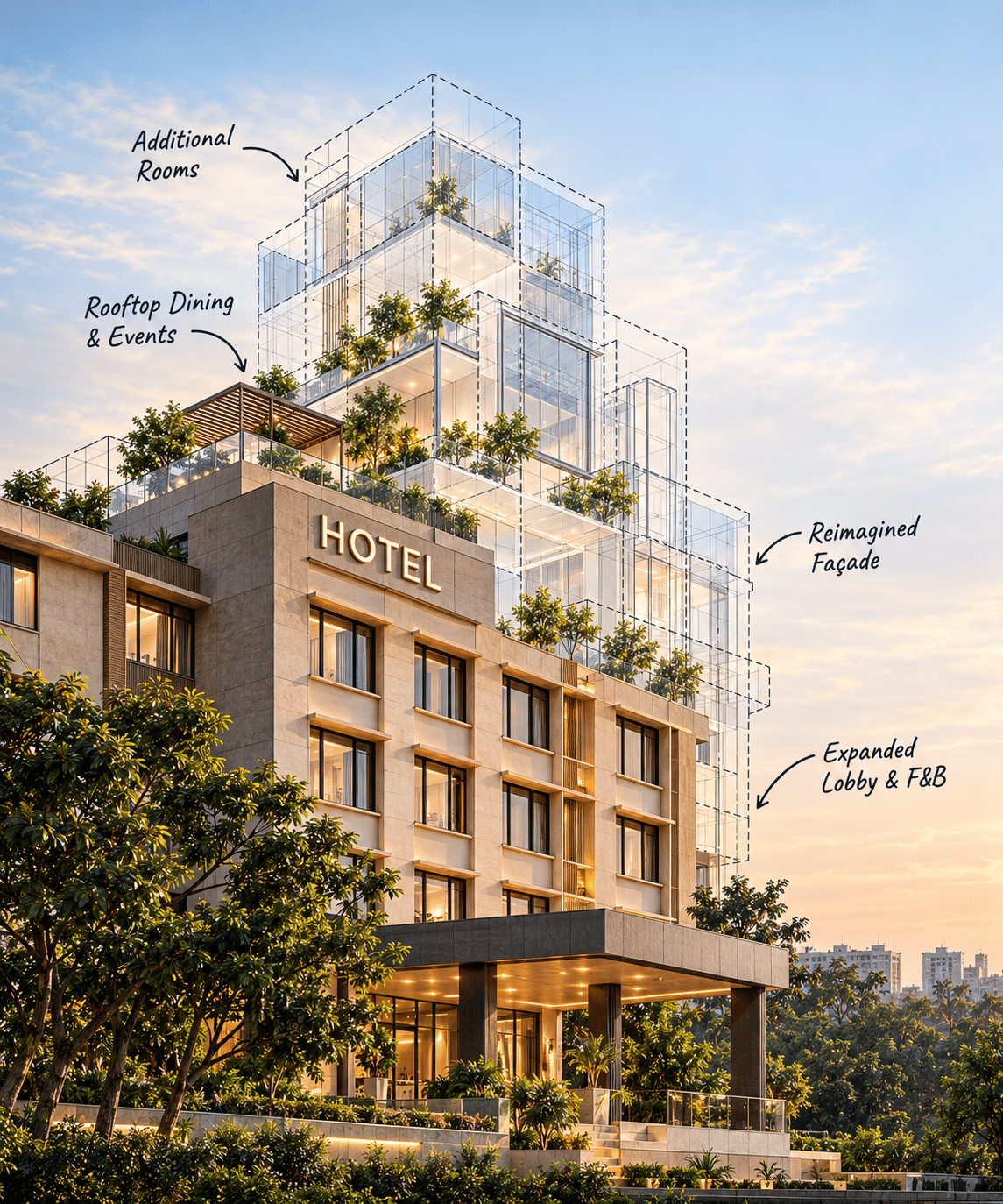
The first decision is not what to build. It is what the hotel should become.
The hotel is more than the building.
An existing hotel is not a blank site. It already contains layers of value — and layers of constraint — that any intervention must account for.
- Development Potential
- Market Presence
- Operating Business
- Infrastructure
- Building
- Land

- Should I add rooms?
- Should I renovate?
- Should I build a banquet?
- Should I approach a hotel brand?
- Should I buy the property next door?
- Should I professionalise operations?
- Or leave the hotel largely as it is?
These are architectural questions — but they are not architectural questions alone. They involve the asset, market, business, operations, infrastructure, capital and the owner's objectives.
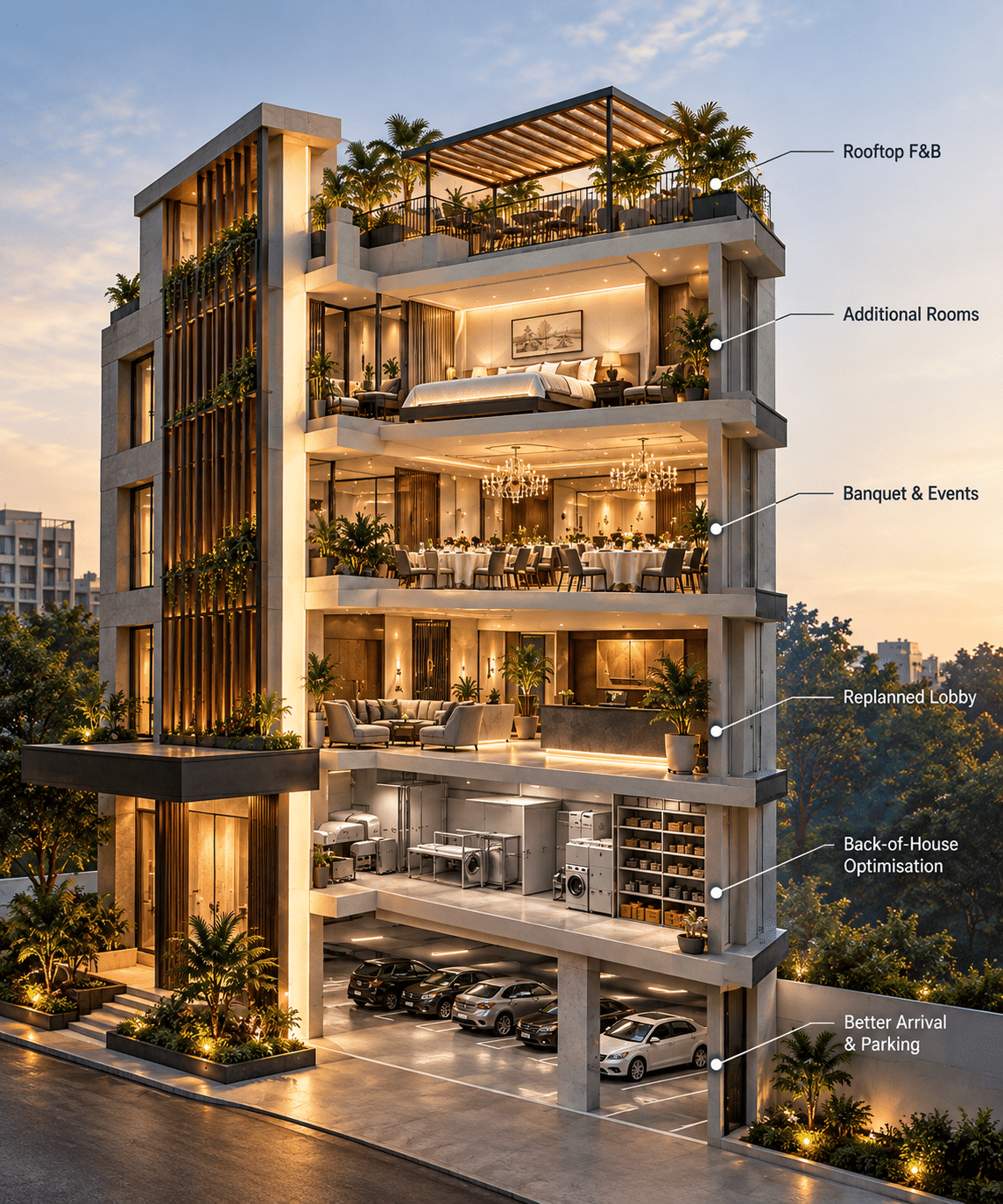
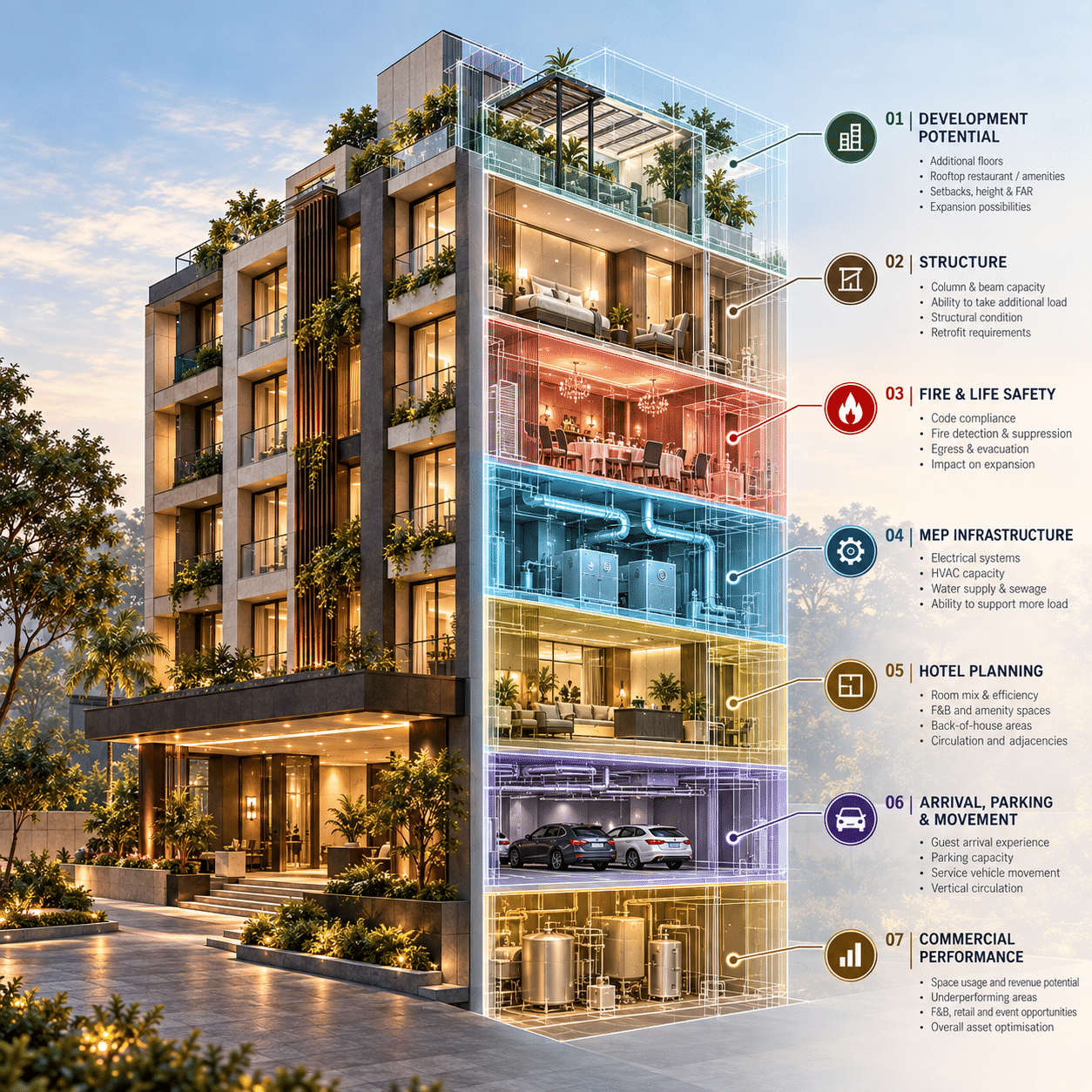
Before expansion, audit what you already have.
An existing hotel contains both assets worth building upon and constraints capable of becoming expensive surprises. A useful audit has seven parts.
- 01Development potential — what is built, what else may be permissible
- 02Structure — can the existing frame accommodate the proposed intervention?
- 03Fire + life safety — how will transformation affect escape and access?
- 04MEP — what technical capacity exists; what requires augmentation?
- 05What generates revenue — and what merely occupies space?
- 06What is inefficient — rooms, circulation, back-of-house?
- 07What does the market actually need from this property?

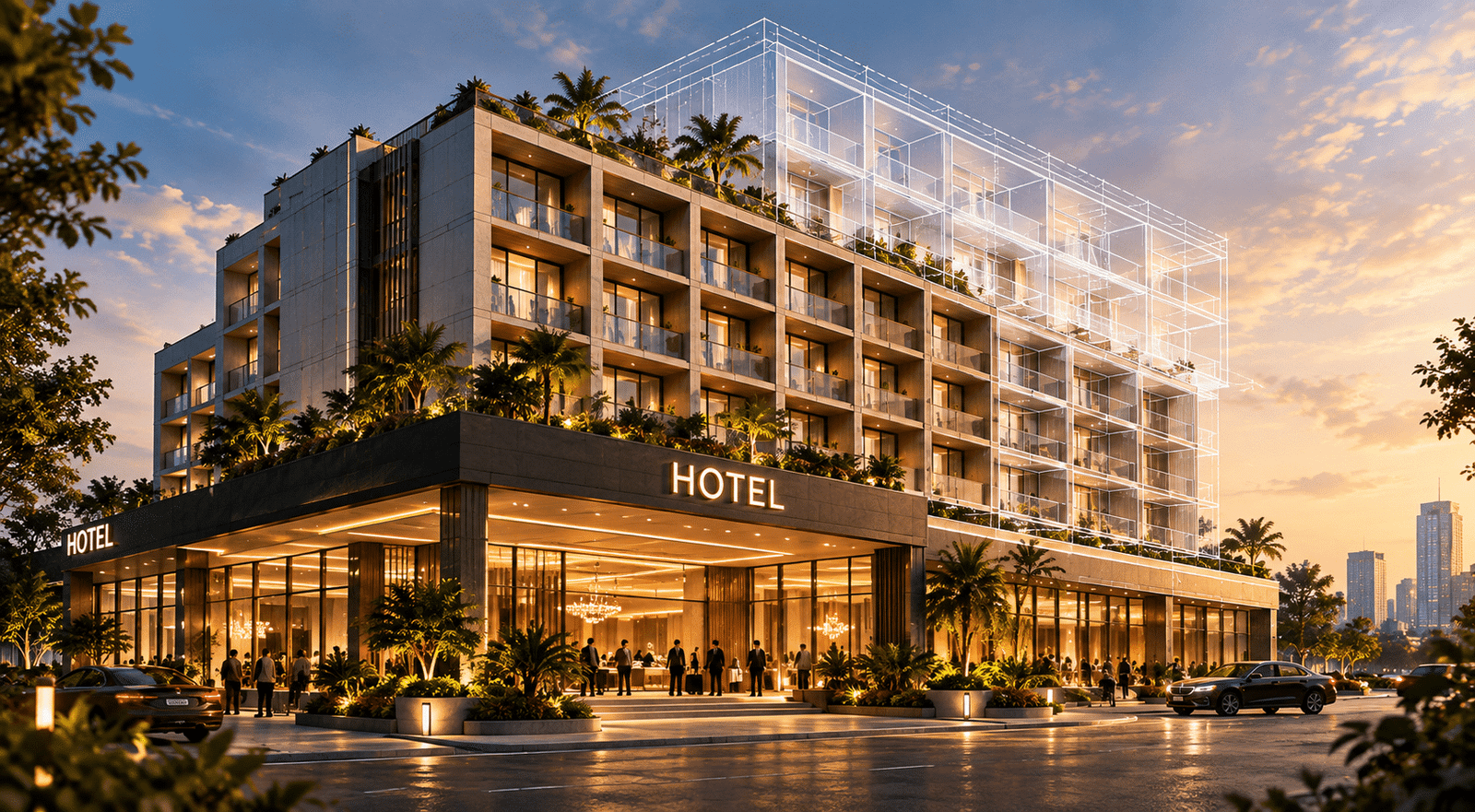
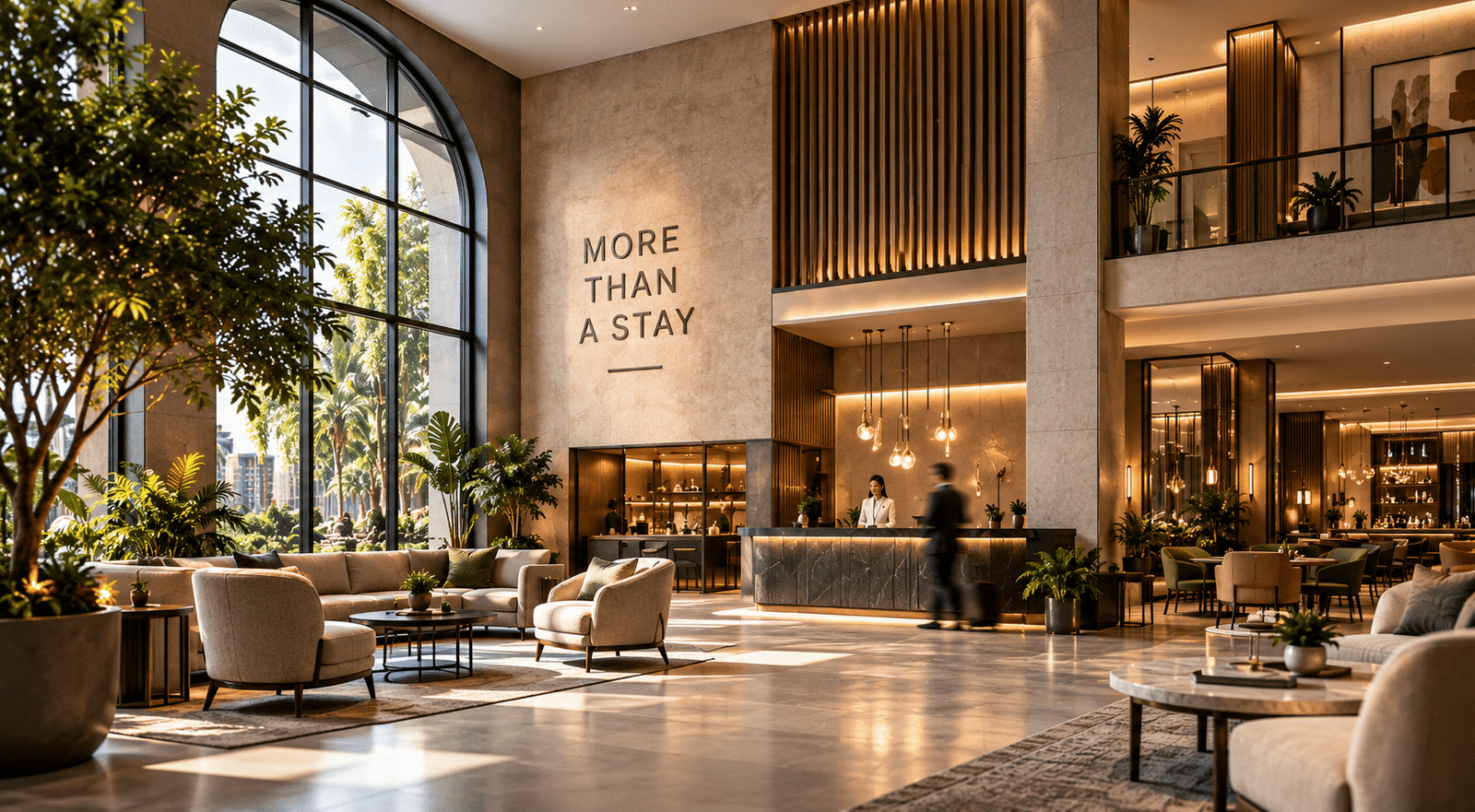
What should this hotel become better at earning from?
Growth does not always require more building. Before adding keys, it is worth asking where the hotel should earn from next — and whether new construction is the most efficient path to that earning.

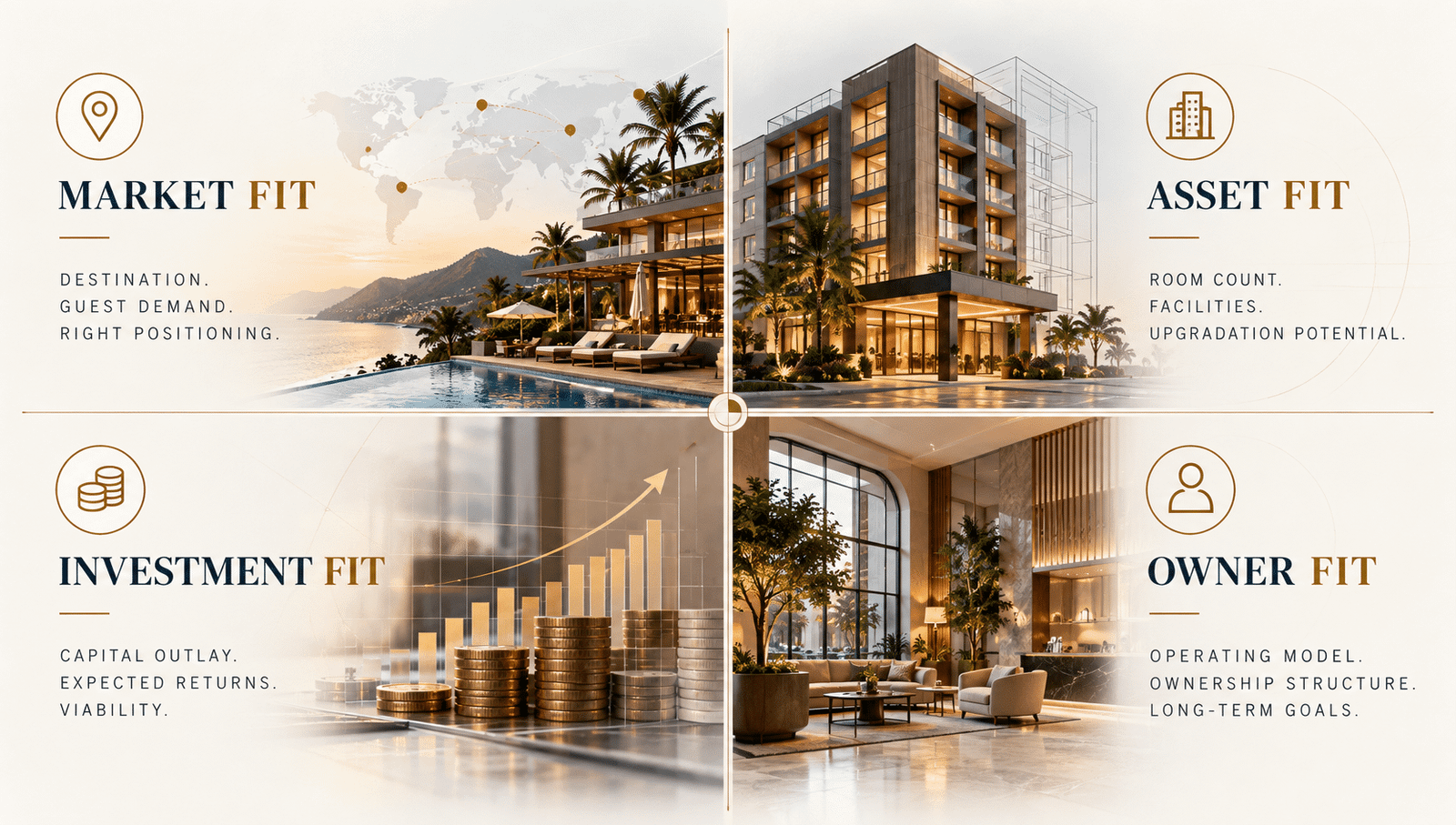
Brand is a strategic decision, not an identity upgrade.
The question is not which brand. The question is whether your hotel — in its current condition, in its market, with its investment capacity — is ready for what a brand affiliation actually requires.
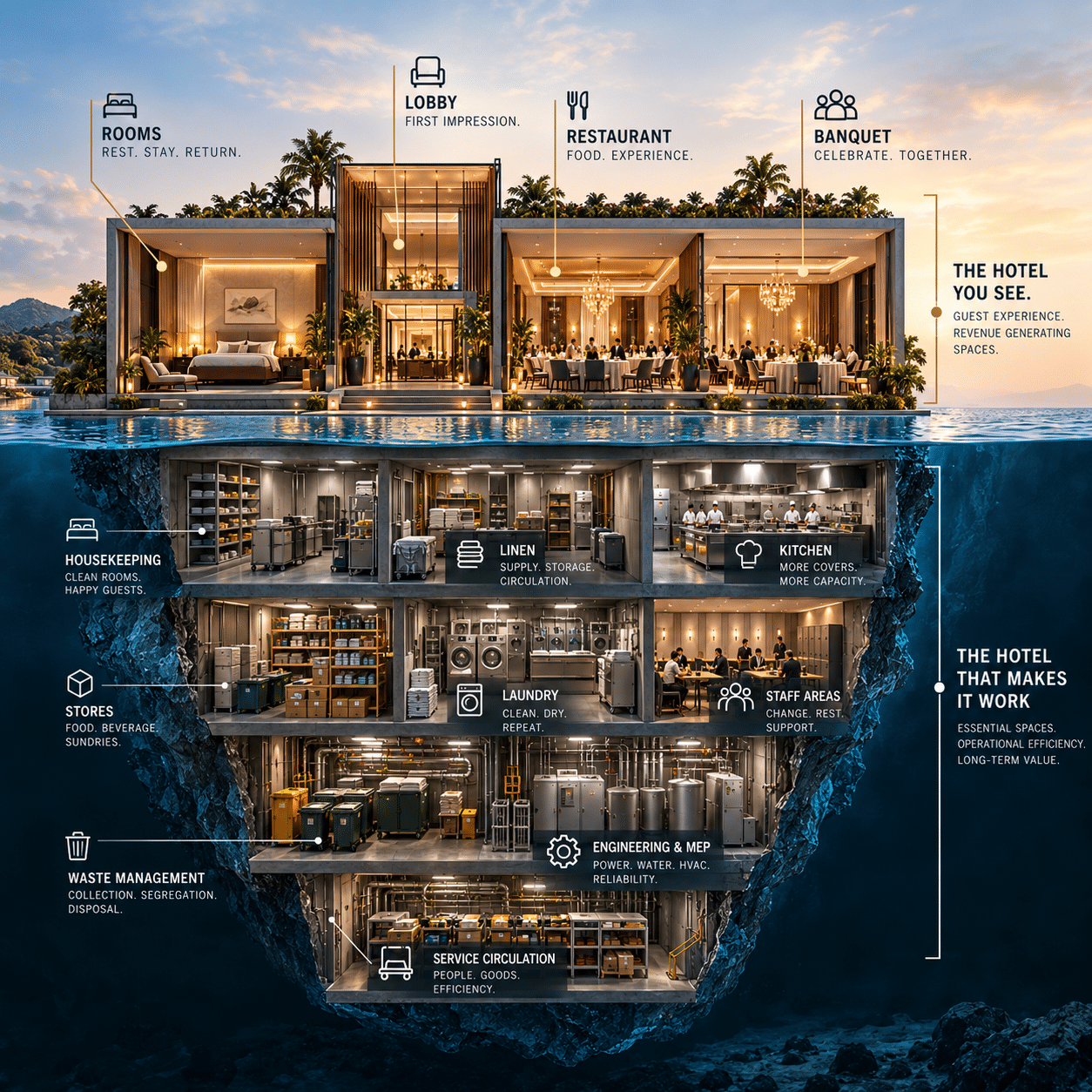
The visible hotel. The invisible hotel.
Above: rooms, lobby, restaurant, banquet. Below: housekeeping, linen, kitchen, stores, staff, laundry, waste, engineering, MEP, service circulation.
Before adding keys, make sure the invisible hotel can support them.
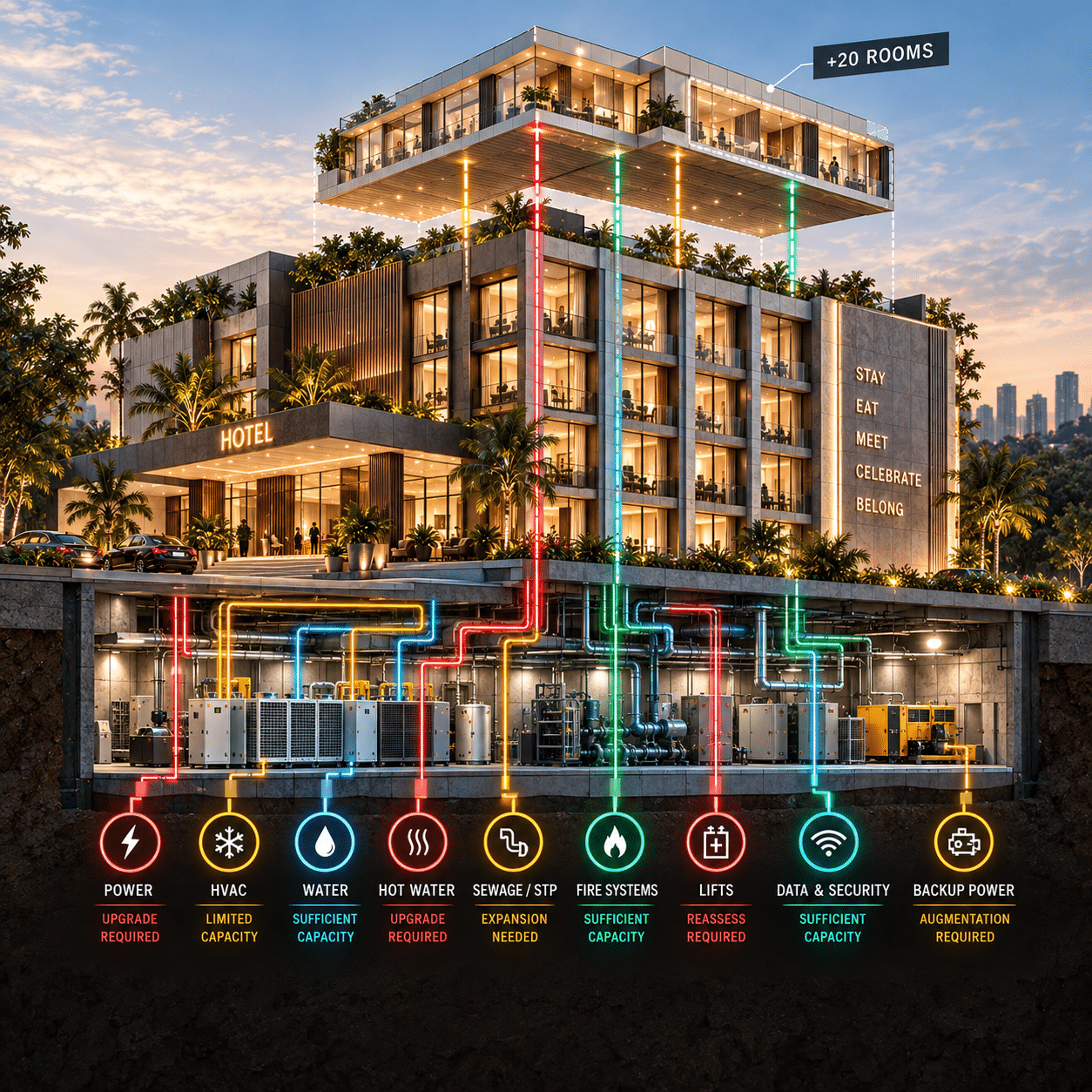
You are not adding rooms. You are adding load.
Every addition to the hotel places new demand on existing systems. The question is not whether those systems are present — it is whether they have the capacity to carry what you are planning.
Can the hotel keep earning while it changes?
An existing hotel is not an empty site. It has guests, staff, revenue, and a calendar. Planning an expansion means planning how the hotel will operate through construction — not just what it will look like when it is finished.

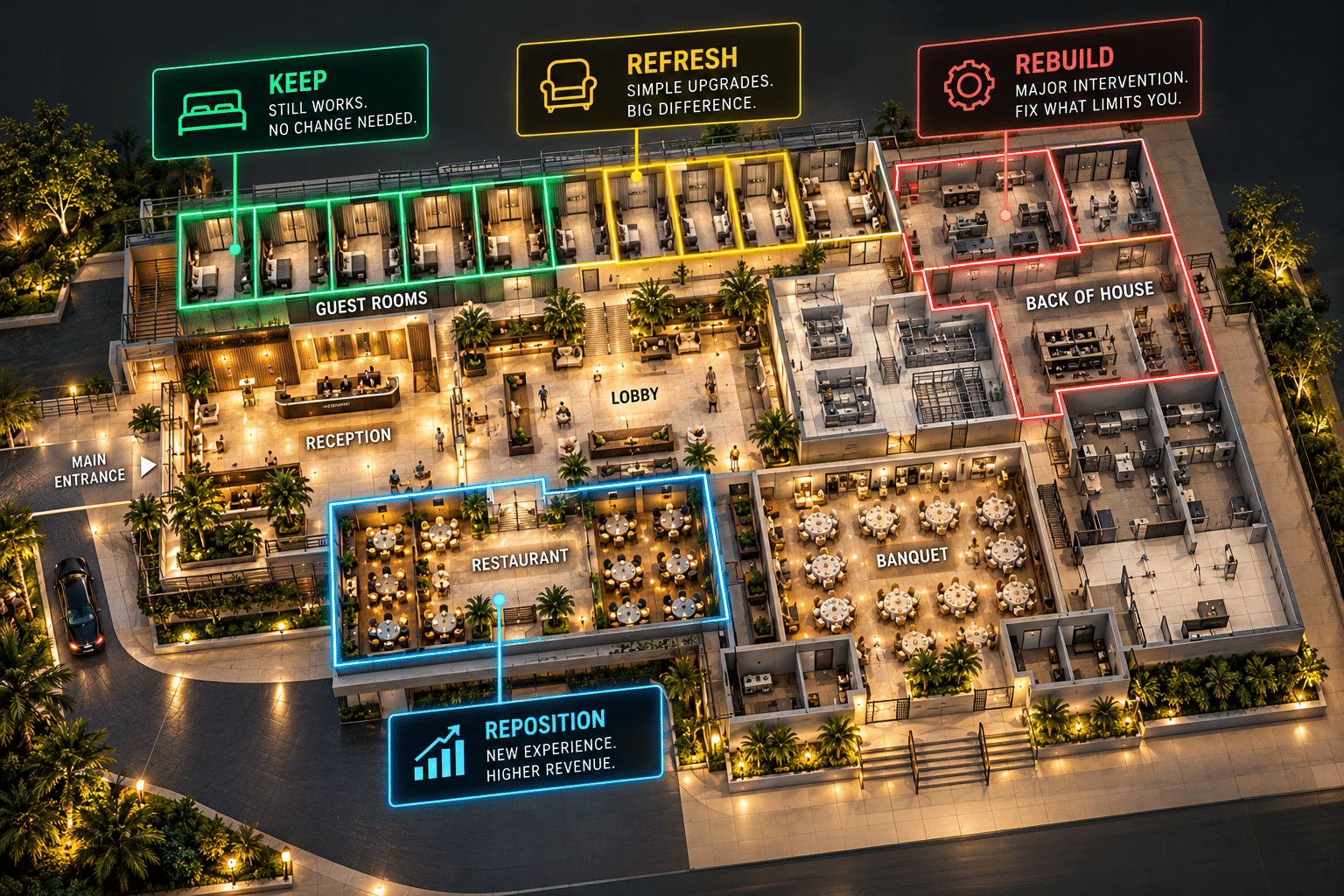
Don't renovate by age. Renovate by value.
Not everything in the hotel needs to change. Some elements still work — technically, aesthetically, operationally. Some need refreshing. Some could perform differently. And some are genuinely holding the hotel back.
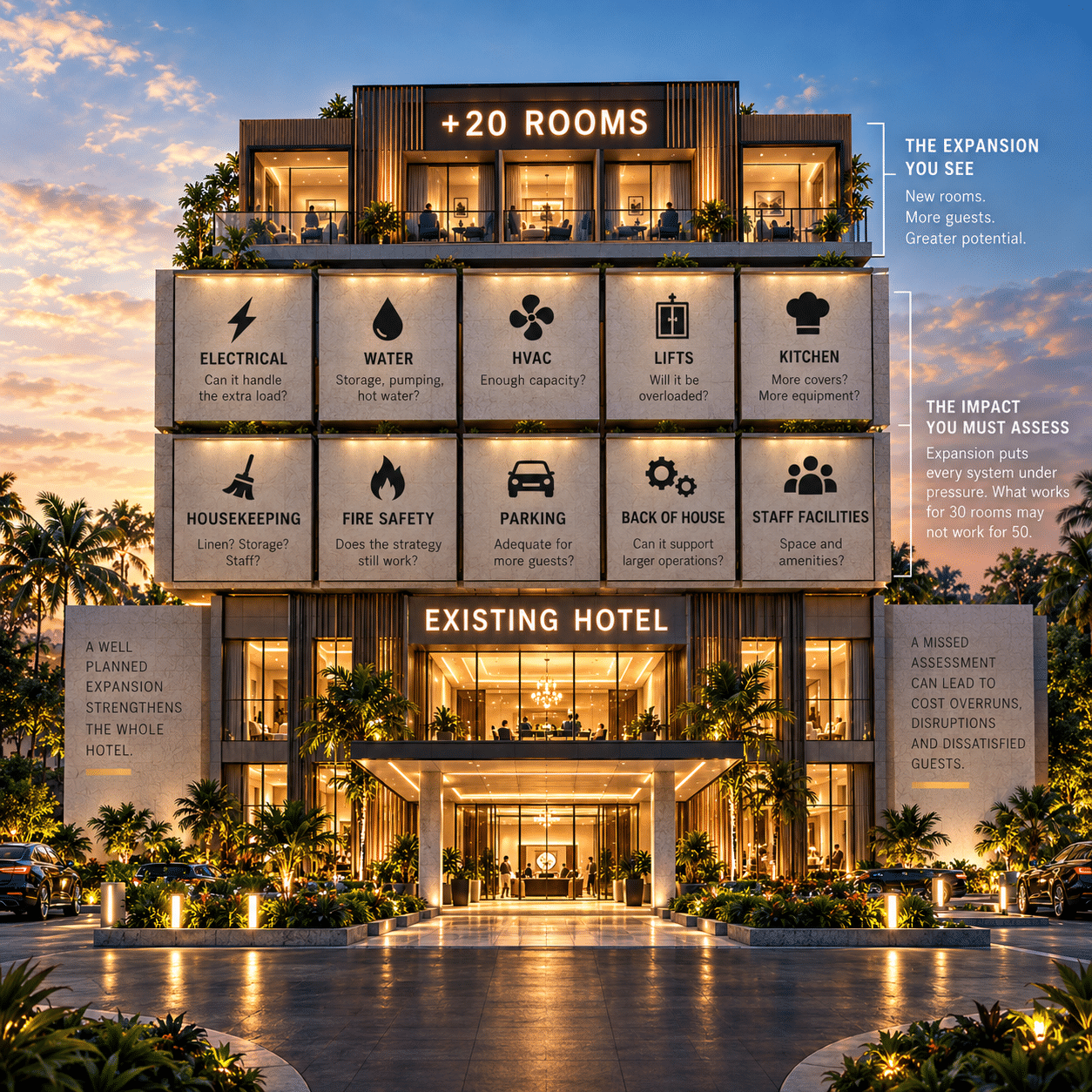
Buildable capacity is not hotel capacity.
The new rooms are only the visible part of an expansion. The existing hotel has to carry them. Six capacities determine whether what is physically possible is also operationally and commercially viable.
Of everything that is possible — what is actually worth doing?
Expansion, renovation, repositioning, brand association, better F&B, an adjoining property, infrastructure investment — all may be possible. The question is which of these possibilities constitutes the right investment decision for this asset, this owner and this market.

Does Room 51 pay for Room 51?
Physical possibility does not automatically establish investment logic. Before the fiftieth room becomes the fifty-first, the question of what that room actually costs to build, operate and carry should be answered — not assumed.

One asset. Several possible futures.
No single direction is predetermined. The same hotel, the same land, the same owner — multiple viable futures. The study reveals which is the right one.
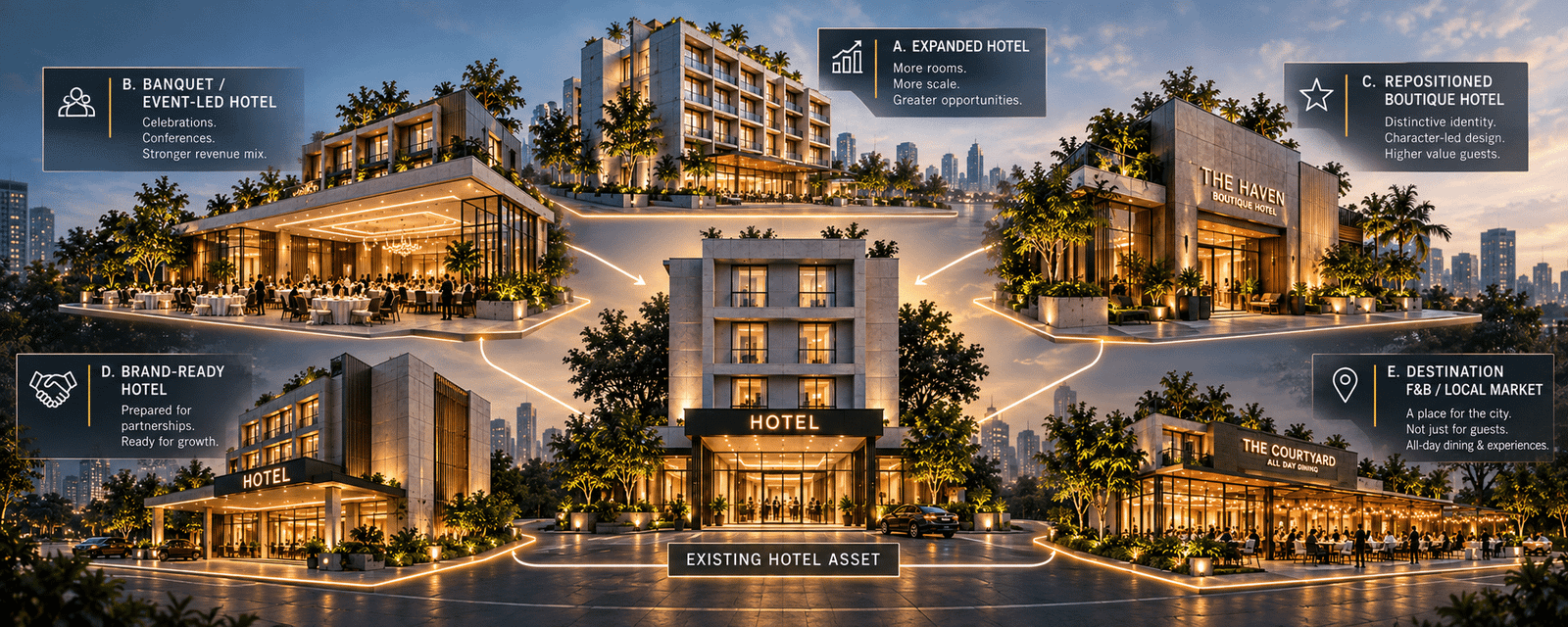
None of these is marked as the answer. The study reveals which direction is right for your hotel.
The objective is not to build more. It is to make a better decision about the asset you already own.
The Hotel Transformation Potential Study is not designed to manufacture architectural work. It is designed to establish whether a proposed intervention is the right decision — for this hotel, this owner, this market.
Hotel Transformation Potential Study
A structured investigation of an existing hotel as an asset — before recommending any intervention. The study examines the property, the market, the business and the owner's objectives, and produces a considered direction rather than a premature construction proposal.
-
→What do you own?Land, building, infrastructure, operating business, market presence, development potential
-
→What is underperforming?Revenue, utilisation, operations, guest experience, physical condition
-
→What does the market support?Demand, guest, occasion, competitive position
-
→What could change?Physical, operational, commercial, positional
-
→What should not change?What is already working and worth protecting
-
→Can the property support it?Structure, infrastructure, operational, investment capacity
-
→What will it cost?Construction, fit-out, operational transition, ongoing costs
-
→What could it return?Revenue potential, asset value, owner's objective
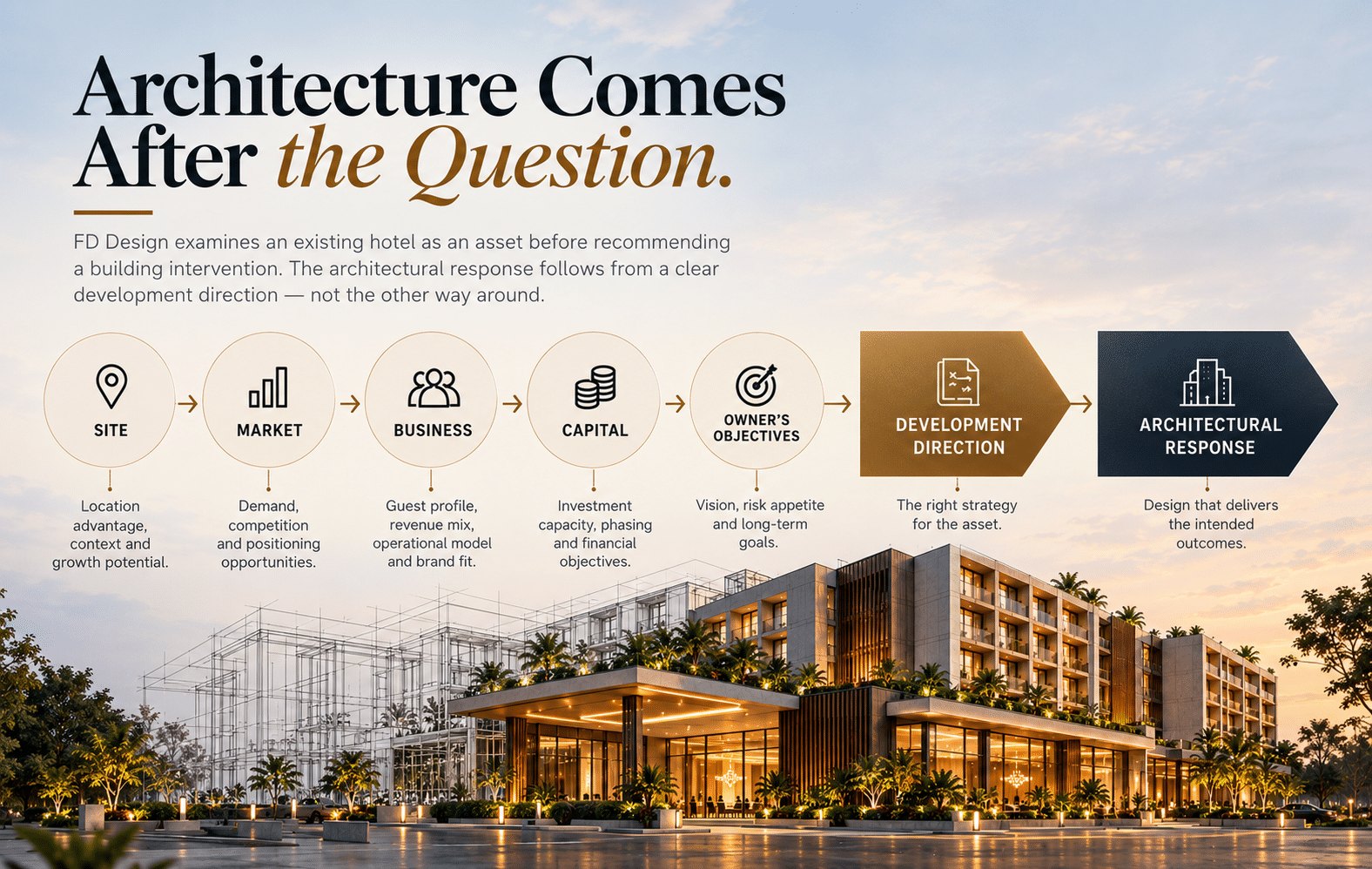
Architecture comes after the question.
Site · Market · Business · Capital · Owner's Objectives → Development Direction → Architectural Response.
FD Design examines an existing hotel as an asset before recommending a building intervention. The architectural response follows from a clear development direction — not the other way around.
You already own the hotel.
What could it become?
If you are considering expansion, renovation, repositioning or a hotel brand association, begin with a conversation before committing to the intervention.
30 Questions Before Your Next Hotel Investment
Six chapters. Thirty questions. A structured way of investigating an existing hotel before recommending any intervention.
- 01Is Your Hotel Running — But Is Your Property Working Hard Enough?
- 02Is There Another Hotel Hidden Inside Your Existing Hotel?
- 03Are You Looking at Your Hotel as a Business — or as an Asset?
- 07What Should an Existing-Hotel Audit Actually Examine?
- 08Is Your Hotel's Problem Really the Interiors — or the Planning?
- 04Before Adding 20 More Rooms, What Should You Ask First?
- 05What Really Changes When a 20-Room Hotel Becomes a 50-Room Hotel?
- 06Should You Renovate, Expand or Reposition?
- 12What Does Owning the Property Next Door Actually Unlock?
- 13Can You Expand an Operating Hotel Without Shutting It Down?
- 20Can Your Hotel Grow Without Adding More Rooms?
- 09Who Is Your Hotel Actually For — and Who Could It Be For?
- 10What Should Your Hotel Become Better at Earning From?
- 11Is There a Local Market Your Hotel Is Not Yet Serving?
- 14Can Your Hotel Absorb a Destination Restaurant?
- 21What Would Premiumisation Actually Require?
- 27How Should You Think About the Event and Banquet Opportunity?
- 28What Would Strengthening F&B Actually Involve?
- 15Is Your Hotel Ready for a Brand Affiliation?
- 16Which Hotel Brand Actually Fits Your Property?
- 17What Would a Brand Actually Require You to Change?
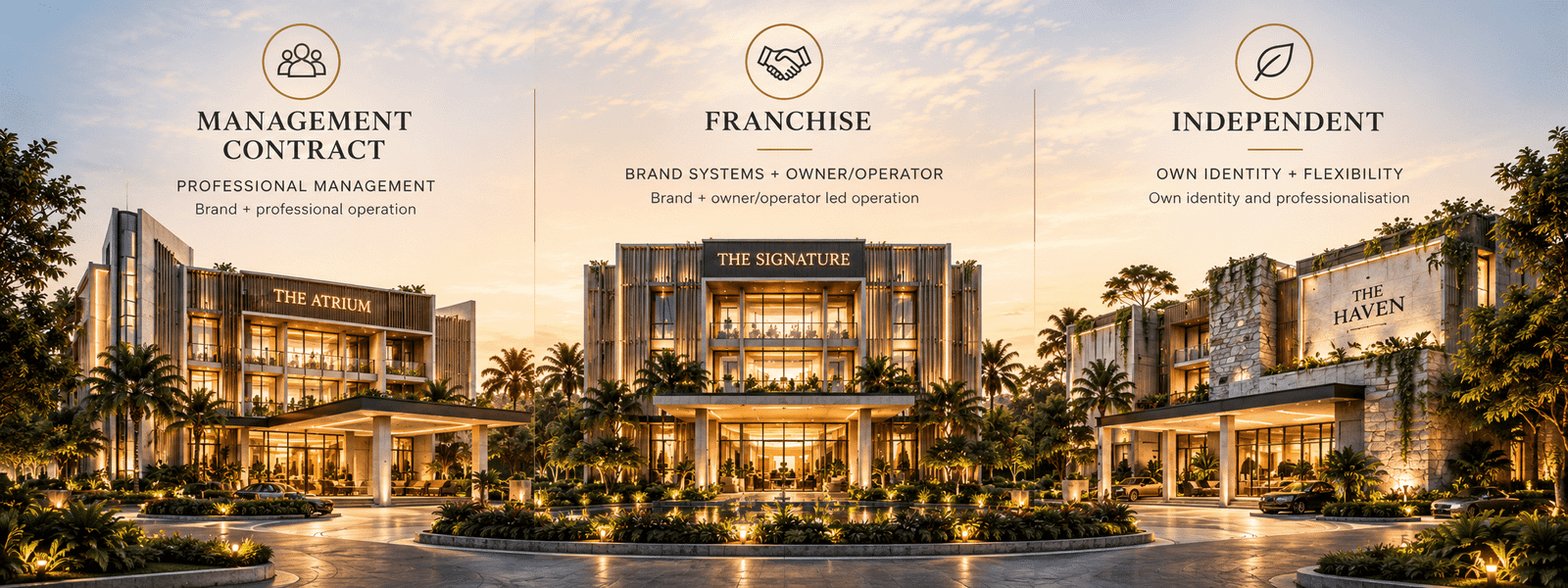
- 18Management Contract, Franchise or Independent — Which Relationship Fits?
- 19Do the Brand Economics Work for Your Hotel?
- 22How Much Can You Add Before the Invisible Hotel Breaks?
- 23Is There Space You Are Not Yet Counting as Buildable?
- 24Can the Infrastructure Carry What You Are Planning?
- 25Can the Hotel Keep Earning While It Changes?
- 26What in the Hotel Should Actually Be Kept, Refreshed, Repositioned or Rebuilt?
- 29Does Room 51 Pay for Room 51?
- 30Of Everything That Is Possible, What Is Actually Worth Doing?